Table of contents
I used to think ‘Zero Waste’ meant living in a pristine jar-filled home, sacrificing all comfort, and becoming a full-time professional environmentalist. Honestly, it felt overwhelming and expensive.
As a woman in my 40s, juggling work, family, and a budget, I needed something practical—something that didn’t add more stress or cost more than it saved. I tried a few of those big, glamorous swaps, and let me tell you, they failed. Miserably.
For instance, I bought a fancy, reusable produce bag set. It was beautiful! But I kept forgetting it in the car, and half the time, the checkout person didn’t know how to scan through it. I felt embarrassed and ended up using plastic anyway. Failure.
My biggest turning point was realizing that zero waste wasn’t about being perfectly zero. It was about the “Refuse” part of the philosophy, specifically one tiny, repeatable routine that genuinely reduced my guilt and my garbage bin.
What I Tried That Failed Spectacularly
Let’s be honest. Americans generate 292 million tons of trash yearly—that’s nearly 5 pounds per person, per day. I used to contribute my full share, plus some. When I first tried to cut back, I fell into every expensive, complicated trap.
Here are a few ‘zero waste’ investments that completely crashed and burned:
- The $50 Bamboo Toothbrush Set: They looked so chic! But after two months, they started growing mold near the base, no matter how well I dried them. My electric toothbrush felt like a necessary return to modern sanitation.
- The Bulk Store Membership: I loved the idea of refilling all my containers. But driving 30 minutes each way, packing up all those jars, and dealing with the inevitable spillage in my trunk? Not worth the time or gas money.
- DIY Cleaning Products: I tried making my own all-purpose cleaner with vinegar and essential oils. It sucked. It smelled like a vinaigrette salad and didn’t clean half as well as my regular store-bought stuff. I learned to choose my battles.
I realized that for this to stick, the solution had to be simpler than the problem.

Zero Waste Saved Me $320/Year: The “Bag-Bottle-Box” Routine
The ultimate success came when I shifted my focus from buying specialized “eco-friendly” products to simply refusing packaging and single-use items.
This three-part routine is the most powerful and the most financially savvy step I’ve taken. I tracked my spending for a year, and here are the numbers:
| Habit | Monthly Savings (Avg.) | Annual Savings (Est.) |
| Refuse Impulse Buys (72-hour rule) | $28 | $336 |
| Reuse Water Bottle (vs. $2 bottled water) | $32 | $384 |
| Total Waste Reduction Cost | $60 | $720 |
| Less Cost of New Reusable Items | -$33 | -$396 |
| Net Savings (Year 1) | $27 | $324 |
Why this works: Economics Focus By cutting out impulse buys and needless $2 water bottles (which I was buying 3-4 times a week!), I saved over $320. That paid for a fun weekend trip to the coast!
My System: The “Bag, Bottle, Box” Trio
I stopped relying on my unreliable memory and created a visual cue right by the front door (a trick I learned from my Korean grandmother for keeping keys and shoes in place!).
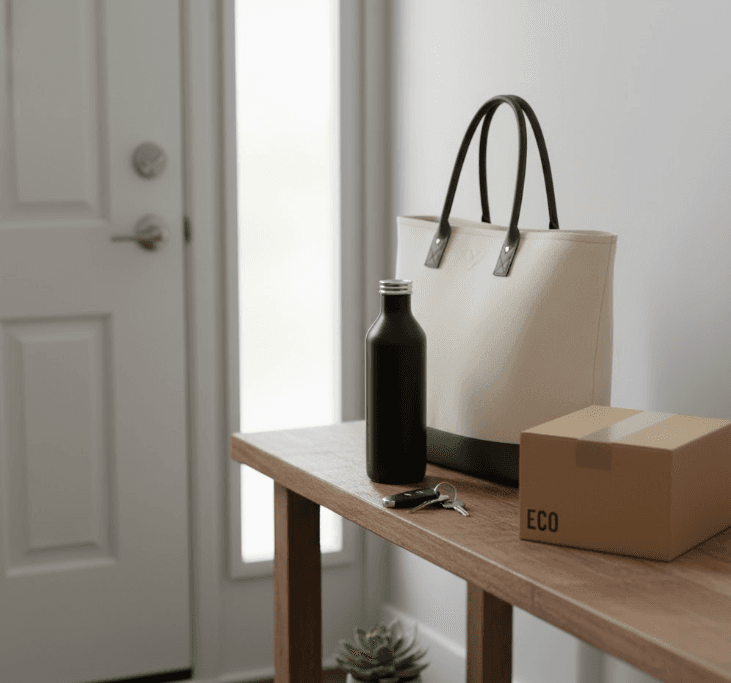
- The Bag: A sturdy, dark canvas tote that folds into a small pouch. It lives inside my everyday shoulder bag. No more forgetting.
- The Bottle: My favorite stainless steel water bottle, kept full and beside my keys. I save money and stay hydrated.
- The Box (The To-Go Container): A small, square Tupperware in my car. This is my secret weapon for leftovers at restaurants or buying pre-made foods at the farmer’s market without the plastic.
Tackling Food Waste
Food waste is a major environmental concern because, when it breaks down in oxygen-free landfills, it releases methane, a powerful greenhouse gas. I wanted to stop contributing to that.
The Logic & Source: According to the Environmental Protection Agency (EPA), treating organic waste through composting can significantly lower greenhouse gas emissions compared to landfilling. Composting is an incredibly impactful action because it stops the methane cycle at the start.
If You Have Access (Like Me):
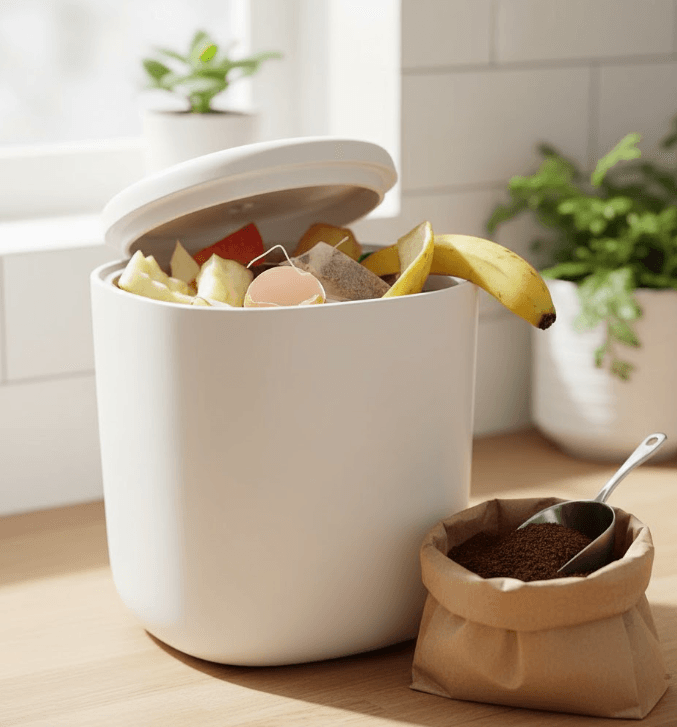
I use a small, sealed countertop bin for vegetable peels and coffee grounds. I’m lucky that my city has a program where I can drop this off weekly.
If Composting Feels Out of Reach:
If your city doesn’t have community composting programs (which is most of America!), don’t stress about it. Focus 100% on the Refuse and Reuse steps—they are just as impactful. You can also:
- Eat Everything: Get creative with scraps! I learned to make stock from vegetable ends.
- Check Local Farmers Markets: Many smaller markets offer compost drop-off services for a small fee.
Extended Tip: Sharing is Saving
I made the “Borrow Don’t Buy” rule official. I created a simple WhatsApp group called “Borrow Don’t Buy [My Neighborhood]”.
- How it Started: I started with 5 neighbors. Now we’re 47 people.
- Most Borrowed Items: The ladder (12 times), the power drill (8 times), and the carpet cleaner (6 times).
This not only saves money and resources, but it connects me to my community in a way online shopping never could.
The Unexpected Gifts of Going Zero-ish Waste
My journey has been messy, but rewarding. I realized that the goal isn’t perfection; it’s being intentional.
If you’re 40+ and looking for a meaningful change that actually saves you time and money, start with one ‘Refuse’ habit this week. I started small, and honestly, the world feels a little bit better, one less plastic bag at a time. Are you ready to try my “Bag, Bottle, Box” routine?






2 thoughts on “Zero-ish Waste: 3 Swaps That Stuck (And 5 That Failed Miserably)”