Table of contents
Like many of you, I’m juggling work, family, and the feeling that I’m constantly running out of time—and money. When I first heard about “Zero Waste,” I pictured endless jars and complicated bulk shopping. It felt utterly exhausting.
My first attempts failed fast. I bought reusable items I never used, and I felt like a failure. So, I stopped trying to be a “Warrior” and focused only on the habits that truly paid off, financially and mentally.
The secret? It’s not just about reducing trash; it’s about reducing consumption. I found that the habits that stuck cut down on my mental load and my spending, giving me eight unexpected ways to save money.
Just a heads-up, this isn’t medical advice or an expert guide; it’s simply what worked for me. You know your life best!
Part 1: Eliminating Repurchases (The Obvious Savings)
These two swaps are the foundation of my routine, directly eliminating items I used to buy repeatedly.
1. The Shampoo Bar Swap That Actually Stuck
I know, I know. You’ve probably tried a shampoo bar that made your hair feel like straw. I did too! I went through three brands before finding one—a simple lavender bar from a small company—that worked for my color-treated hair.
How I Save: The key to the savings is longevity. I found that if I cut the bar in half right when I buy it and keep the second half tucked away in a cool, dry cabinet, the bar lasts up to three times longer than liquid shampoo. The shower’s constant humidity was the biggest enemy, melting the bar away too fast. This simple habit means I buy four bars a year instead of 12 plastic bottles, saving me around $60 annually. It works because I’m letting the product fully dry between uses.

2. Ditching Disposable Cotton Rounds: The Time-Saver Tip
My second favorite swap was reusable cotton rounds. I was buying a $5 bag of disposable rounds every month and running out at the worst possible moment—usually midnight.
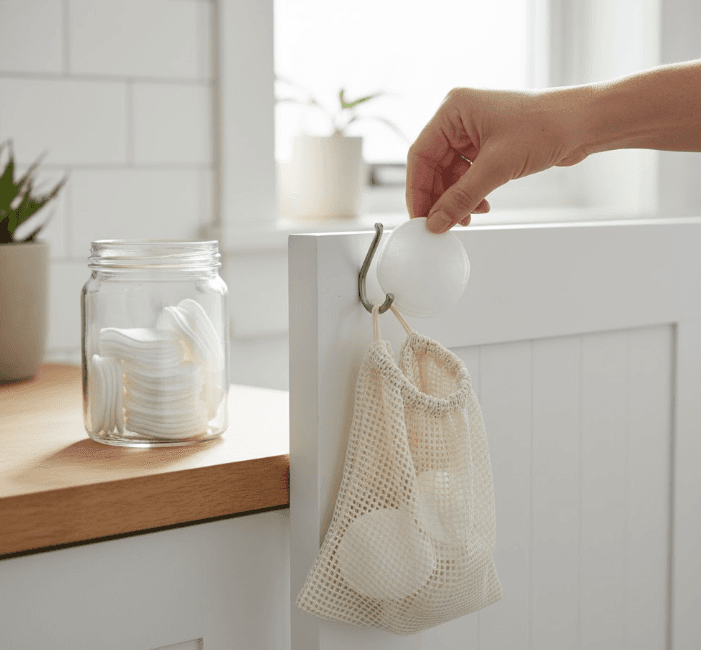
How I Save: I bought a pack of ten reusable rounds with a small mesh laundry bag. I keep the clean ones in a jar on my vanity, and the tiny mesh bag hangs right on the doorknob. Used rounds go straight in the bag. When the bag is full, I toss the whole bag into the wash with my towels. This eliminated those monthly drugstore dashes. I calculated that by cutting out the $5 monthly cost, I save another $60 a year. The original $15 purchase for the set paid for itself in three months.
Part 2: Changing Habits (The Unexpected Savings)
Once I got the hang of the small swaps, the zero-waste mindset started bleeding into my shopping and mental habits, creating bigger, unexpected financial gains.
3. Fewer Impulse Buys in the Grocery Store
I used to spend money on convenience. Now, by bringing my own sturdy produce bags and containers, I naturally became aware of packaging.
How I Save: I stopped buying things like plastic-wrapped berry containers and expensive pre-chopped salad kits. Instead, I focus on buying bulk oats, dried beans, and seasonal, unpackaged produce. When I started tracking, I realized I was spending 10–15% less on my $100 weekly grocery bill simply by prioritizing unpackaged ingredients. That’s about $780 saved annually just from shopping with a clearer intention.
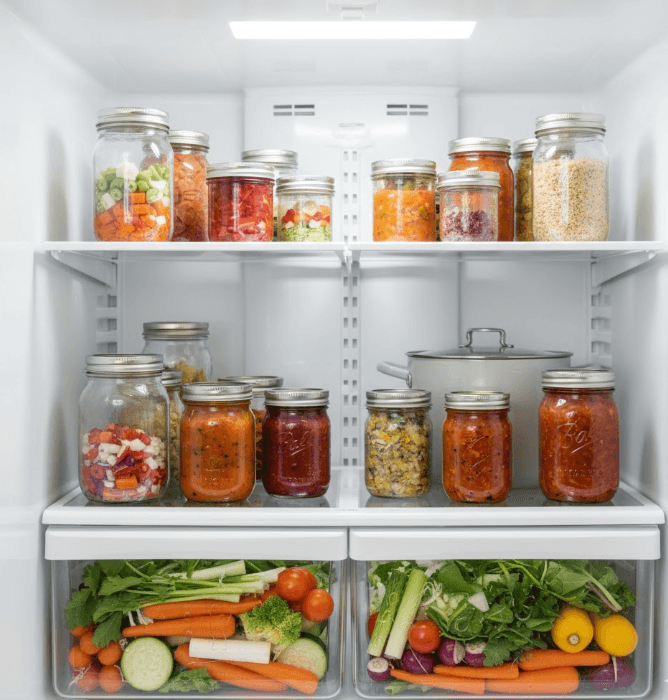
4. Better Food Storage, Less Waste
I used to toss half-eaten leftovers in opaque containers and forget about them until they were fuzzy.
How I Save: I switched everything to clear glass jars (old jam jars, Mason jars). When I can see what’s in the fridge, I eat it. That simple visual cue, paired with my new habit of making “fridge soup” every Sunday, has drastically reduced food waste. I’m no longer throwing out forgotten produce or leftovers, which I estimate saves me a conservative $240 a year.
5. No More Fast Fashion Guilt
My personal failure was a $30 dress I bought online that ripped near the seam after the second wash. I realized “cheap” means paying twice.
How I Save: I now live by the rule: repair before replace. I spend about $15 to have my local tailor hem a pair of pants or repair a button instead of spending $80 on a new item. By shifting my mindset to buying high-quality used items, or simply wearing what I already own, I reduced my impulsive clothing spending by about $100 per quarter, resulting in approximately $400 saved annually.
6. The Joy of Natural Cleaning
Before, I had four different bottles of specialized cleaner cluttering up my cabinet. Now, I use three simple, non-toxic ingredients.
How I Save: My go-to recipe is simple: one part distilled white vinegar, one part water, and a few drops of dish soap in a reusable spray bottle. It works for 90% of surfaces—kitchen counters, glass, and bathroom tiles. By eliminating four specialty bottles a year (Windex, floor cleaner, etc.), which cost around $7 each, I save around $28 annually. It may not seem like much, but the peace of mind knowing I’m not spraying harsh chemicals is substantial.
7. DIY Gifts, Better Connections
Instead of panicking about running to the store for a generic $25 gift, I started making personalized items.
How I Save: My favorite is a simple homemade coffee scrub (used coffee grounds, coconut oil, and sugar). It takes minutes and costs about $3 in ingredients, but looks beautiful in a repurposed jar. By replacing five store-bought gifts per year with something thoughtful and homemade, I save approximately $100 annually.
8. Mental Clarity (The Biggest Saver)
This is the most unexpected financial gain. By having fewer things—fewer bottles, fewer disposables, less clutter—my brain has fewer decisions to make.
How I Save: This reduction in mental load means I’m less stressed, and less stressed means I’m less likely to comfort-shop online after a long day. If I cut out just one random online impulse purchase per month (which easily averages $25), I save about $300 a year. As experts like those at Eco-Cycle often point out, reducing consumption isn’t just about money; it’s linked to reduced exposure to pollutants, which improves community well-being—a profound benefit that goes beyond the budget.
My Grand Total Savings
When I add up all these small habits, I’m not just saving a few dollars. These 8 simple shifts save me approximately $1,968 per year.
Zero waste doesn’t have to mean all or nothing. It means finding small pockets of change that make sense for your budget and your sanity. Start small, find what sticks, and don’t worry about the rest.
If you’re looking for more ways to stick to a budget-friendly, low-waste life, check out these posts:







1 thought on “Zero Waste: 8 Unexpected Ways This Habit Saves You Money”