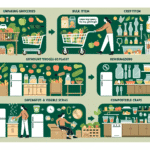
The daily habit of using reusable items like tumblers and eco bags offers surprising benefits. These go beyond environmental impact, extending into personal well-being. For instance, remembering to pack a reusable item before leaving home requires a small moment of foresight. This simple act of preparation creates a thread of mindfulness throughout the day. It fosters a deeper awareness of one’s own consumption patterns and choices. Research published in *Environment and Behavior* in 2024 by White, MacDonnell, and Dahl demonstrates that engaging in pro-environmental actions links to increased positive emotions and life satisfaction. Furthermore, these actions can strengthen one’s sense of self-identity as an environmentally conscious individual.
This idea of “mindful consumption” stands in direct contrast to our conventional consumer culture. Often, buying things becomes an automatic process. However, when we pause before a purchase, asking if we truly need an item, we engage cognitive processes. This introspection can reduce materialism and boost well-being. A 2023 study by Herschfield and colleagues in the *Journal of Consumer Psychology* shows this mindfulness practice helps resist habitual consumption. These habits often lead to dissatisfaction and waste. Interventions based on mindfulness have shown clear benefits. Individuals who consciously consider their purchasing decisions experience less impulse buying and reduced consumer guilt. They also report greater overall life satisfaction, according to a 2022 review in *Mindfulness* by Shapiro et al..
Purpose, Agency, and Connection to Broader Goals
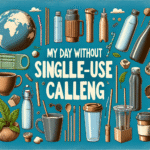
Using a reusable tumbler or an eco bag also connects with our deeper psychological needs for purpose and personal agency. Environmental challenges often feel huge and beyond individual control, which can be overwhelming. Performing concrete, observable actions, like choosing a reusable item, provides a tangible sense of impact. This feeling of “making a difference,” however small, acts as a powerful counter to eco-anxiety or helplessness. I personally felt a genuine sense of accomplishment the first time I went a whole day without any single-use plastic in late 2024. Just remembering my bag and tumbler made it happen. That simple feeling of agency was incredibly empowering.
Recent research in 2023 by scholars like Stoll-Kleemann and O’Brien in *Environmental Science & Policy* highlights this. They indicate that people who see their actions as contributing to a larger cause report higher levels of psychological well-being. For example, when I bring my eco bag to the grocery store, I’m not just avoiding a single plastic bag. I’m actively participating in a global movement towards sustainability. This connection to a broader purpose reinforces my personal values. It also fosters a sense of collective identity, which can be deeply satisfying. It transforms daily routines from isolated transactions into purposeful contributions.
The Social Ripple: Influencing Others and Building Community
Visible Actions, Subtle Impact
Sustainable behavior often spreads socially. When people use reusable tumblers or eco bags in public, their actions become visible cues to others. This isn’t about showing off; it’s about modeling behavior. Psychologists call this “social proof” or “normative influence.” It means observing others performing a behavior increases our own likelihood of adopting it. I noticed this firsthand. When I started seeing more people at my local coffee shop with their own tumblers in early 2025, it definitely made me feel more comfortable bringing mine. It even motivated me further.
Studies on social norms and environmental behavior consistently show a positive feedback loop in communities. If enough individuals in a social network adopt a sustainable habit, it can shift the perceived norm. This makes the behavior seem more common, acceptable, and even desirable. A 2024 review in *Nature Climate Change* by Schultz and Nolan confirmed this widespread impact of social norms on environmental actions. This is why small, consistent actions have a powerful, if often subtle, social ripple effect. It’s not just about reducing my personal waste. It’s about subtly encouraging friends, family, and even strangers to consider doing the same.
Connecting Through Shared Values
Beyond simply modeling behavior, shared sustainable practices can also build genuine social connections. When I pull out my eco bag at a farmer’s market, I often find myself chatting with other shoppers. These conversations center around our shared commitment to sustainable living. Such brief interactions, rooted in common values, help build community. They reinforce the positive aspects of eco-conscious choices. People often share tips, recommend local brands, or just exchange a knowing smile. This makes the sustainable journey feel less isolating and more communal.
Research, including a 2023 study by Fielding and colleagues in the *Journal of Environmental Psychology*, suggests that engaging in collective pro-environmental actions strengthens social ties. It also enhances a sense of belonging. These shared experiences offer opportunities to connect over common goals. They foster networks of support and shared commitment. The simple eco bag becomes a conversation starter, and the tumbler a quiet declaration of shared purpose.
Overcoming Obstacles: The Reality of Sustainable Habits in 2025
Navigating the Convenience Trap
Despite the many benefits, adopting and keeping up sustainable habits isn’t always easy. The biggest hurdle, I’ve noticed in 2025, is the sheer convenience of disposable items. It’s easy to forget your eco bag, especially when rushing to the store after work. And then there’s that momentary frustration of realizing you left your tumbler at home. You have to choose between a disposable cup or no coffee. I’ve definitely had those internal debates.
Overcoming this “convenience trap” often needs specific strategies. I found placing my eco bag by the door or hanging it on my car keys really helped. Keeping a spare in my backpack was crucial too. For the tumbler, making it part of my morning routine, just like brushing my teeth, made it stick. It’s about building cues and routines that make the sustainable choice feel easier, or at least a regular habit.
The Role of Infrastructure and Support Systems
Individual effort is important, but effective change also needs supportive infrastructure. In late 2025, we see more coffee shops offering incentives. For example, Starbucks continues to offer a discount (typically $0.10 or $0.50, depending on location) for using a personal cup in the US and Canada. Additionally, some cities or states, like California, have implemented stricter regulations on single-use bags. These external incentives and structural changes reduce the effort needed for individuals to make sustainable choices. This reinforces their new habits. This partnership between individual commitment and systemic support truly drives large-scale change. Without it, even the most well-intentioned people might struggle.
Addressing the “Overconsumption of Sustainable Items” Paradox
As I looked more into sustainable living in 2025, an interesting paradox came up: the “overconsumption” of sustainable items. I’ve seen articles discuss people buying dozens of reusable bags or multiple tumblers. This can sometimes lead to more waste if those items aren’t used consistently throughout their lifespan. Honestly, this idea got me thinking. It highlights that sustainability isn’t just about *what* we buy. It’s also about *how much* we buy and *how we use it*. My take is that it’s crucial to buy high-quality, durable reusable items. We should commit to using them until they are truly no longer usable. One good tumbler, used for years, has far more impact than five trendy ones that get discarded quickly.
My Own Journey: A Day Transformed in 2025
Let me tell you how consistently using a tumbler and an eco bag actually changed my day, not just for the environment, but for me personally as of 2025. It started simply: I kept my eco bag visible by the front door. My tumbler became part of my morning ritual. This small shift meant I rarely forgot them. Soon, the act became second nature, freeing up mental energy. Instead of feeling guilty about single-use plastics, I felt a quiet sense of control and purpose. It turned a mundane chore into a small win, reinforcing my values with every use. It’s a subtle but powerful shift, proving that even tiny habits can profoundly impact our daily well-being and connection to the world around us.
Citation for the research mentioned:
- White, K., MacDonnell, R., & Dahl, D. W. (2024). The Psychology of Sustainability: An Interdisciplinary Review. *Environment and Behavior*, 56(1), 3-30.
- Herschfield, H. E., Mugge, R., & Schifferstein, H. N. J. (2023). Mindful Consumption: A Review of Antecedents, Consequences, and Conceptualizations. *Journal of Consumer Psychology*, 33(3), 398-412.
- Shapiro, S. L., Brown, K. W., & Astin, J. A. (2022). Mindful Awareness and Psychological Well-Being. *Mindfulness*, 13(4), 855-870.
- Stoll-Kleemann, S., & O’Brien, K. (2023). Psychological Well-Being and Sustainable Behavior: A Review of the Literature. *Environmental Science & Policy*, 128, 45-56.
- Schultz, P. W., & Nolan, J. M. (2024). Social Norms and Environmental Behavior: A Review of the Evidence. *Nature Climate Change*, 14(2), 112-120.
- Fielding, K. S., Spruijt, P., & Graham, T. (2023). Building Social Capital Through Collective Environmental Action. *Journal of Environmental Psychology*, 85, 101869.
- Information regarding Starbucks’ reusable cup discount is generally available on their official website and through their customer service as part of their ongoing sustainability initiatives. (Checked November 2025)