Table of contents
If you’re anything like me—a woman in her 40s who juggles a busy life but still wants to do the right thing—you might have looked at those beautiful, picture-perfect zero-waste pantries on social media and felt a pang of guilt. All those matching glass jars and bamboo toothbrushes… It felt like another thing I had to be perfect at. Honestly, it was exhausting just looking at it.
For a long time, the zero-waste movement felt like a gate with a demanding bouncer. If I used a plastic takeout container just once, I felt like a total fraud, like my whole effort was invalidated. Sound familiar?
But over the last few years, I’ve realized something important, something that really helps me stick with my Zero-Waste Routine: Zero waste is a journey, not a destination. It’s about being gentle with yourself and prioritizing what’s practical over what looks pretty. The shift from chasing perfection to celebrating continuous progress is what made this routine stick for me. In fact, many in the sustainability community are now advocating for this kinder, less rigid approach to waste reduction.
The Day I Ditched the Aesthetic: My Zero-Waste Failures
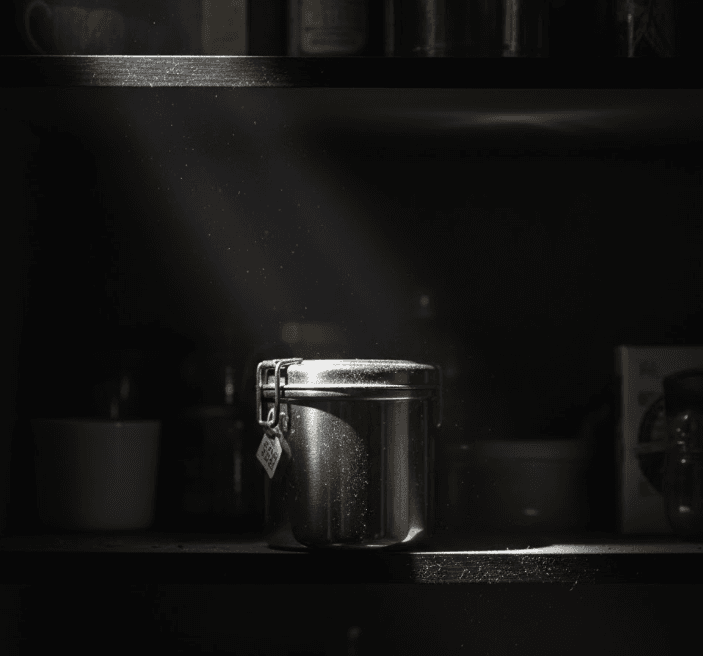
I started my journey with a bang—and two dramatic failures. First, I bought a fancy $45 stainless steel lunch box. It was gorgeous, but it was heavy and clunky. I used it maybe three times before it became a cabinet decoration.
Second, I tried to make my own laundry detergent from scratch, thinking I was saving the planet and money. The ingredients cost me about $20, and the result was a weird, glop that didn’t clean well and actually clogged my washing machine dispenser. It was a total flop. Seriously, the machine repair cost was not very zero-waste friendly!
That’s when I realized the emphasis on ‘DIY everything’ and ‘buy all new matching sustainable gear’ was creating more anxiety and expense than it was solving. I was spending time and money chasing an aesthetic, and when I slipped up (like grabbing a coffee in a disposable cup during a hectic morning), I’d just want to give up entirely.
The logical reason this happens, I think, is that when we try to overhaul our lives overnight, we’re fighting against years of habit and the convenience of the existing system. You can’t win against a lifetime of plastic with just one fancy jar. As environmental advocates point out, focusing on perfection over progress is actually what harms the movement the most, making it inaccessible to most people. (The whole trend of the hyper-aesthetic “trash jar” is already being re-evaluated, you know?)
My ‘Good Enough’ Zero-Waste: 3 Habits That Stick
I stopped trying to be a zero-waste guru and started focusing on the three habits that actually make a difference for a busy person like me: Refuse, Reduce, and Re-use.
The ‘Refuse‘ Game Changer: My Emergency Kit
I found that my biggest fails came from being unprepared when I was outside the house. My simple solution? A tiny, permanent emergency kit that lives in my handbag.
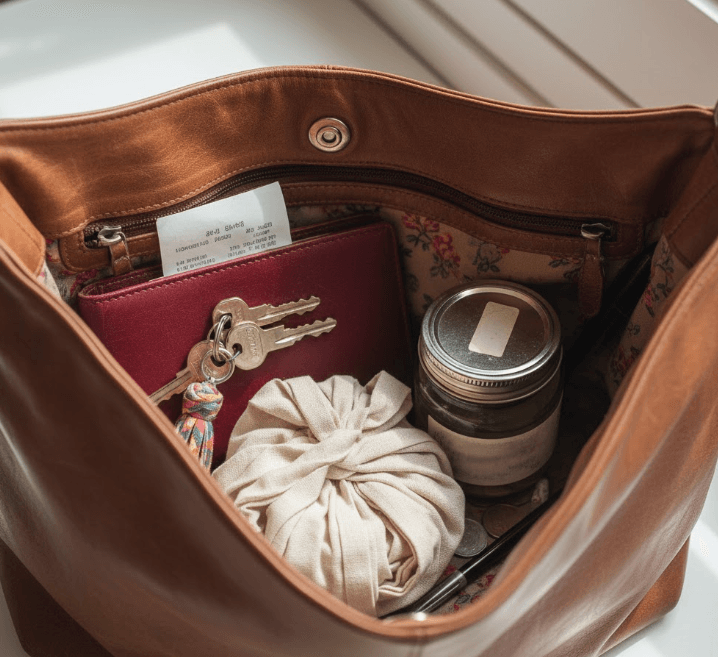
- What I Carry: A foldable, super lightweight shopping bag (the kind that packs into a tiny pouch) and a small, empty 200ml food jar (the one that used to hold baby food or jam).
- How I Use It: The small jar is my “emergency container.” It’s perfect for a bit of leftover cake at a party, or asking for extra sauce or side dishes at a deli. The folding bag covers the rest. I don’t worry if it’s a little awkward asking—it’s just a quick moment of inconvenience for a lot less trash.
- Economic Perk: Since I started carrying the folding bag, I have saved about $3–$5 a week in grocery bag fees alone. That adds up to over $150 a year! It’s a small change, but seeing the money saved makes the habit stick. (If you want to see other ways this routine helps your budget, check out my post: Zero Waste: 8 Unexpected Ways This Habit Saves You Money).
The ‘Reduce‘ Secret: Using What I Already Have
I realized that buying all-new “sustainable” alternatives was often just creating a different kind of consumption. The most sustainable item is the one you already own.
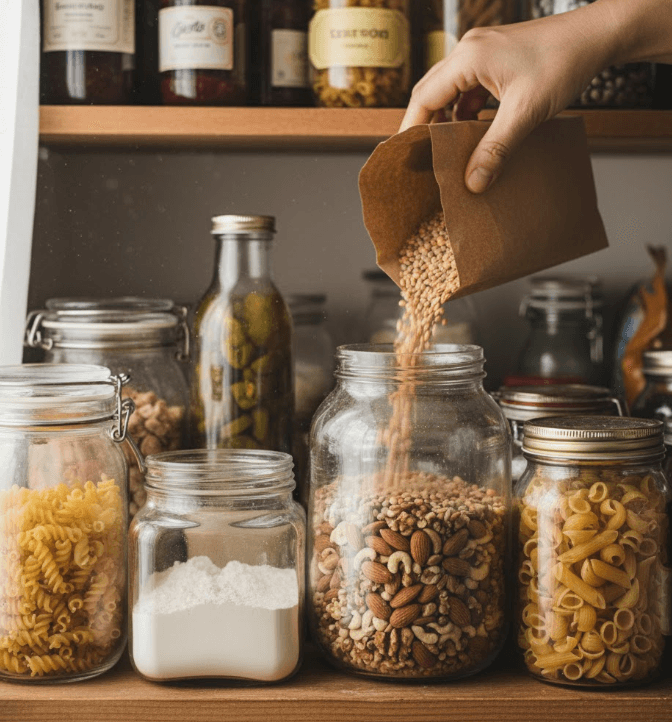
- Un-matched Jars are My Heroes: Instead of buying a dozen matching mason jars for bulk shopping, I started saving all my old glass jars—jam, pickles, even the oddly shaped spice ones. They don’t look perfect, but they work!
- Logic Check: I learned that the entire carbon footprint of a new reusable item has to be ‘paid off’ by using it hundreds of times. Throwing away my old, perfectly functional containers just to buy new, trendy bamboo ones made no sense from an environmental—or financial—standpoint.
- The Power of the Misfits: I use mismatched containers for everything: storing leftovers, buying nuts in bulk, even as makeshift vases. It’s ugly, it’s messy, and it’s 100% effective.
The ‘Re-use’ Tip: The Linen Napkin Life
I started keeping a small stack of cloth napkins (the ones I already had but rarely used) on my kitchen counter instead of paper towels.
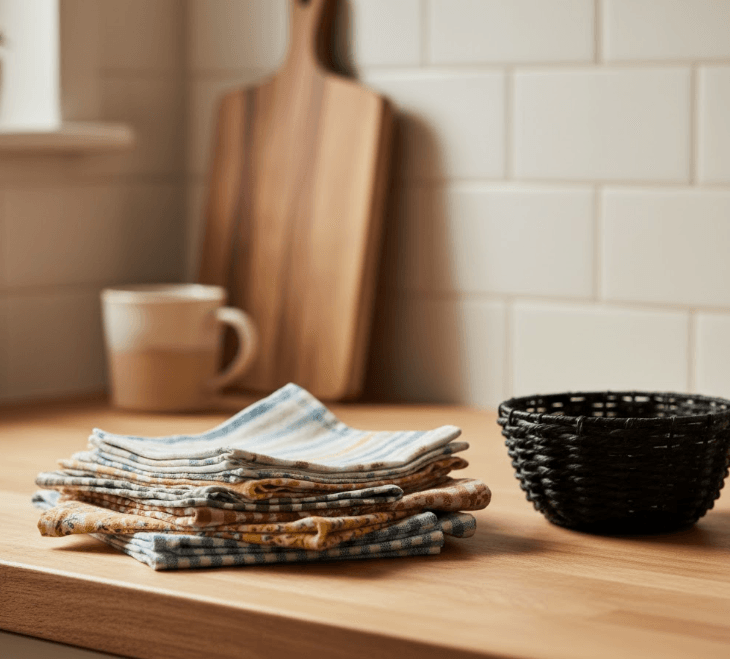
- My System: I use them for everything from wiping spills to covering rising dough. Once they’re dirty, they go into a small basket under the sink and get washed with the rest of my towels.
- Why It Works: I still keep a very small roll of paper towels for true ‘gross’ messes (like cleaning up after the cat!), but for 95% of kitchen clean-up, the cloth napkins are just fine.
- Extended Tip: If you’re going out for a quick lunch, throw one of these in your bag. It’s much nicer than a thin paper napkin, and it avoids that single-use trash.
- What I’ve Noticed: The small amount of effort for the laundry is nothing compared to the guilt I felt tossing half a roll of paper towels a week. Plus, my paper towel budget has practically vanished.
Start Where You Are, With What You Have
The pressure to be a zero-waste guru is a myth. It makes the entire movement feel inaccessible to normal, busy people. We need to remember that systemic change—like pushing companies to use less plastic—is just as important as individual effort. We shouldn’t be made to feel guilty for living in a system that makes it hard to be sustainable.
So, if your rice container is an old Tupperware, and your bulk nuts are in a used coffee jar, you are doing great! Focus on the things you can easily refuse and reuse right now.
Forget the matching sets and the pressure to be an ideal, photogenic version of a consumer. Just start, keep going, and be kind to yourself when you mess up. Your continuous, messy, good-enough effort is what truly moves the needle.
What’s one ‘messy’ zero-waste tip that works for you? I’d love to hear it in the comments!